When you buy beginner needle felting kits through our links, Felt & Parcel may earn a commission at no extra cost to you. How Felt & Parcel earns referral fees
You do not need a large craft budget to discover the calming rhythm of needle felting. Here is how to pick your first affordable project without getting stuck with useless tools.
Needle felting has an almost magical appeal: you take wisps of loose roving, poke them repeatedly with a notched barb, and watch the fibers interlock into solid fabric or three-dimensional forms. But if you have never handled a felting needle before, spending thirty or forty dollars on a premium kit can feel daunting.
Thankfully, introductory kits have become remarkably accessible. For well under $10, you can pick up a dedicated project that contains the exact wool palette, design outline, and basic needles needed to finish a piece. The key is understanding which style of felting best suits your current patience level—and what gear you will need to keep your fingers safe along the way.
Path 1: 2D "Wool Painting" Kits (The Most Forgiving Start)
If you have never felted before, starting with a two-dimensional wool painting framed in an embroidery hoop is often far less intimidating than sculpting a freeform 3D creature. Because the wool is anchored into a backing fabric, you do not have to worry about core density, weight balance, or an animal's limb collapsing.
These kits function much like painting with fiber: you lay down broad background washes of sky and ground, then tack in midground hills and foreground details like cottages or flowers.
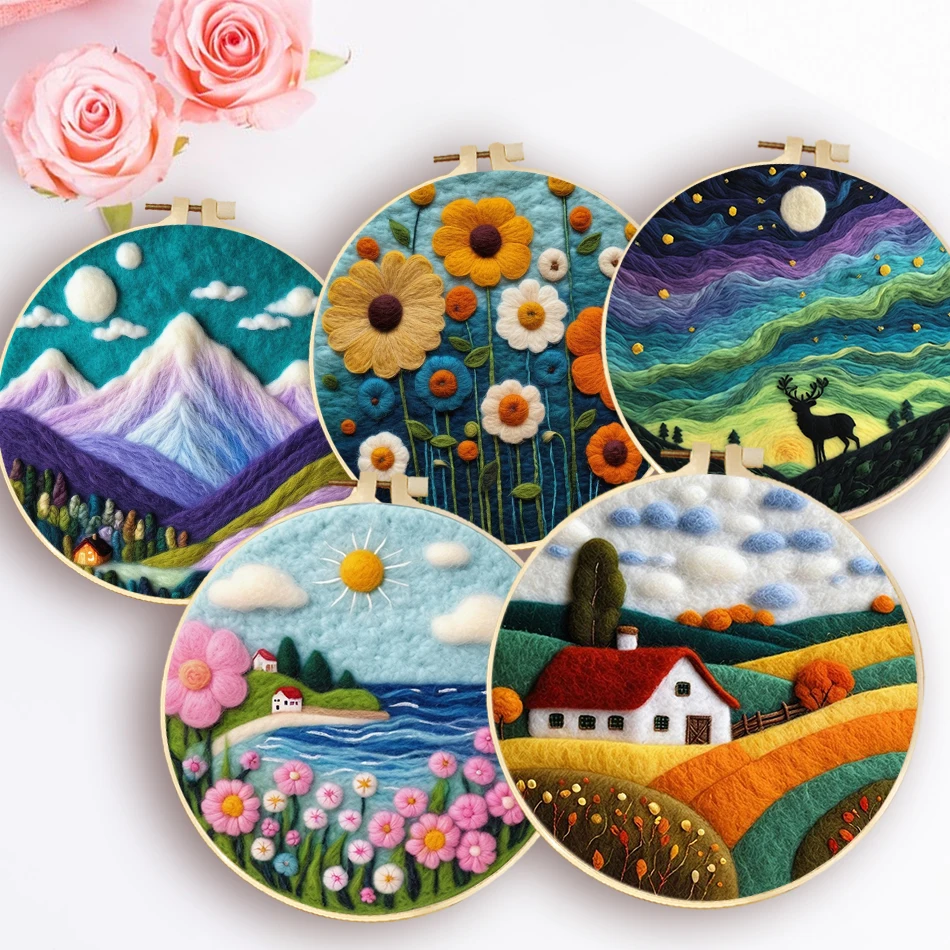
The GATYZTORY Landscape Wool Painting Kit ($5.97) offers colorful, illustrative scenic layouts—from mountain valleys to coastal cottages—designed to finish right inside a display hoop. It provides a structured playground for learning how much wool to pull, how to blend contrasting fibers, and how needle depth influences surface texture.

Similarly, the SDOYUNO Night Sky Scenery Kit ($6.47) focuses on celestial, atmospheric designs featuring moons, swirling constellations, and nighttime hills. Dark backgrounds require neat fiber placement, making these kits ideal if you enjoy deliberate, rhythmic layering and vibrant contrast.
Path 2: 3D Sculptural Kits (For Hands-On Crafters)
Sculptural felting—creating self-standing little animals and figurines—is what draws many crafters to the medium in the first place. Instead of tacking roving onto a fabric backing, you roll wool into balls, cylinders, and teardrops, compressing the fibers into dense shapes entirely with needle strikes.
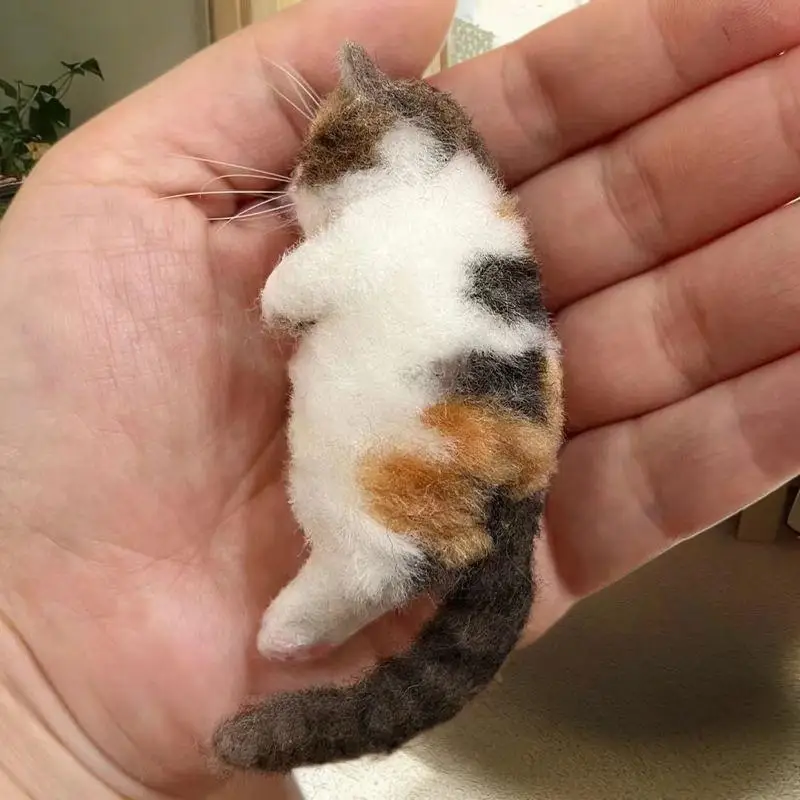
The Stone's Store Cat Poke Simulation Kit ($7.40) walks you through building a miniature sleeping feline. Sculpting rounded animal bodies teaches foundational spatial control: shaping tight paws, tapering ears, and blending patterned calico or tabby patches across curved surfaces.
Keep in mind that 3D sculpting requires steady patience. You must compress the wool until the core feels firm, like a dense sponge, before attaching limbs or smoothing exterior fur. If you rush, the piece remains squishy and easily deformed.
The Budget Upgrade: Dedicated Needles & Finger Cots
Discount starter kits usually include one or two standard needles. While adequate for completing small projects, single budget needles have two distinct limitations: they break easily if bent sideways, and tacking down wide background areas with a single point can strain your wrist.
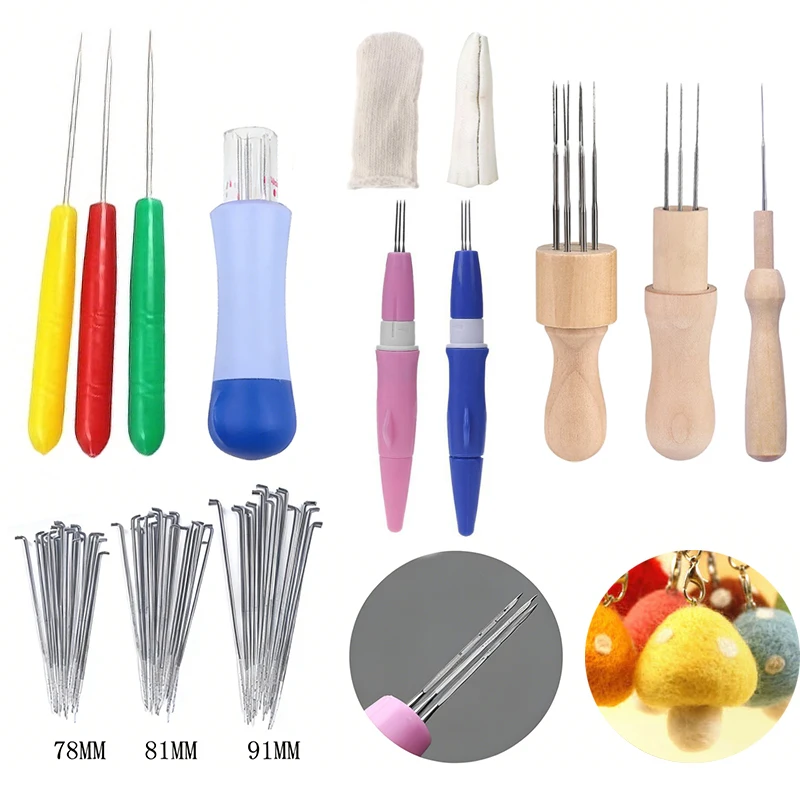
Adding a multi-tool bundle like the Wool Felting Needles & Tool Set ($5.41) is the most practical companion purchase you can make. It supplies wooden multi-needle punch handles (which cut flat felting time drastically), varying needle lengths (78mm to 91mm), and leather finger cots. When you are learning the angle of entry, those little finger guards will save you from painful pricks.
What to Check Before You Begin
- Work Surface Protection: Most budget kits provide wool and needles, but double-check whether a high-density foam felting pad is included. If not, a clean kitchen sponge or a piece of upholstery foam makes a serviceable temporary work mat to protect your table.
- Straight In, Straight Out: Felting needles are brittle tempered steel with fine barbs. If you twist or lever the needle while inside the wool, it will snap. Maintain a consistent straight poking angle.
- Take Pauses: Working at a table with small hand motions can tense your neck and wrists. Rest your hands every twenty minutes to keep your needle control steady.
Whether you choose the peaceful, painterly progress of a landscape hoop or the tactile challenge of a sculpted sleeping cat, these low-cost kits give you an honest feel for the craft without a heavy investment.